For software costs, it is really a burden for small business. There are a number of alternatives to buying expensive big brand software.
We would like to share our software cost saving experiences as a small business in Hong Kong. It is important to maintain the productivity but with lower costs.
Operating Systems
Linux
In many years ago, Linux is really difficult to use and not possible for general users to touch it directly. Currently, Linux is being well developed over the last decade with more matured graphical interface from legacy X Windows to GNOME and KDE. For general public, the user experience is now similar to take a Windows or Mac machine. It would take 1 / 2 months to learn but it is not rocket science. My suggestion is taking open source and free-of-charge Linux like
Ubuntu as desktop Operating System (OS).
For server, there are lots of Linux distro available and depending on the usage.
CentOS is one of my favorite for website, database clusters ,etc.
Word Processing and Spreadsheet
OpenOffice and LibreOffice
Microsoft Office is still dominating the market selling at the price of more than US$200 for each business user.
Open Office was being chosen in my company for cost-cutting about 2 years ago. Recently, we have moved another similar open source with better user-interface –
LibreOffice. LibreOffice is now a very hot office suite available in Linux, Windows and Mac OS X.
Productivity
Photo Editing Tools
GIMP is the most complete photo editing open source tool. For beginners, it is quite difficult but it provides functions as powerful as Adobe Photoshop. I am also using this tool for my website.
Project Management Tool
Nowadays, project management becomes more important across different industry. A free project management tool could help the project managers to assign and manage tasks without buying the expensive Microsoft Project. We are using
ProjectLibre as the primary project management tool.
Programming Tools
There are lots of programming languages available. For the programming IDE, it is suggested to use
Eclipse to do Java, C++, Ruby on Rails, etc. If you are a data scientist like me, one of the best tool is
RStudio (community version) for R and
Anaconda with Jupyter Notebook for Python development. Meanwhile, there are 2 great editor including Notepad++ and Atom.
Diagramming and Vector Graphics Tool
Visio is too extensive for most of the individuals and small businesses. My choice is
yEd with its concise interface and graphics collection.
ERP
There are many different open source ERP and we would like to suggest simple one only –
WebERP and FrontAccounting. FrontAccounting is one of most easiest and fit for small business. WebERP is suitable for small to medium size businesses with more complex operation flows.
POS
There is a simple web POS system
Open Source POS. We are using it at our office for a small number of retail transactions.
CRM
There are a number of open source CRM but only basic features are available for free version. However, there are 2 of them being recommended –
Zoho (free for team<5 people) and
EspoCRM (basic features).
Backup Tools
We are using
UrBackup as the primary backup solution for our own workstations. It is an open source server-client backup solution allowing backup of Windows system image and files backup with both full-backup and incremental backup available.
To conclude, there are lots of freeware and open source available in the market to improve productivity. For cost saving, another alternative way is to use cloud services like IaaS, SaaS, etc. to alleviate the initial costs. However, if you would like to know more about software tools, you can reach our professional service team at the “
contact us” session and raising your questions at the contact form.
Samuel Sum
Vice President,
Archsolution Limited 
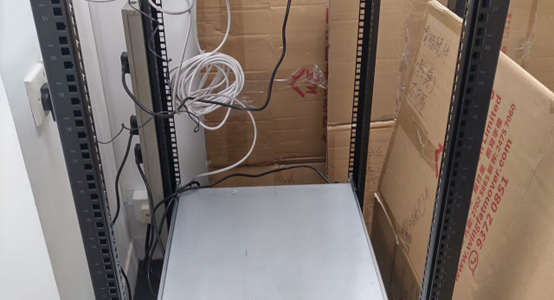
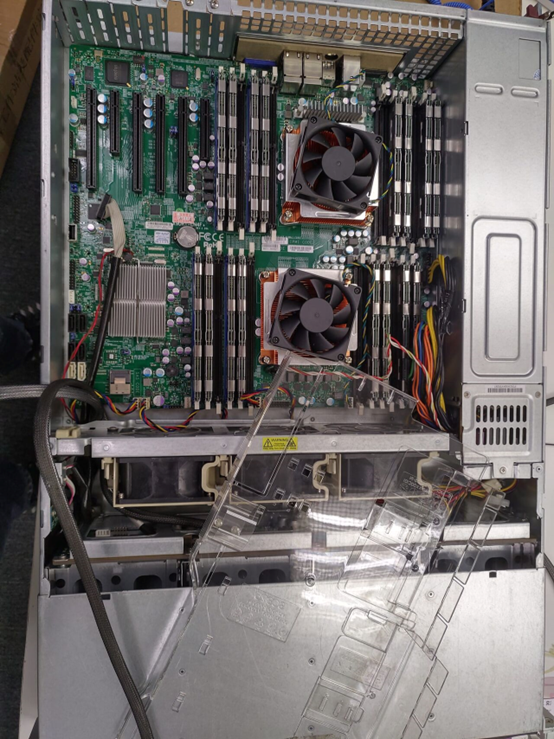
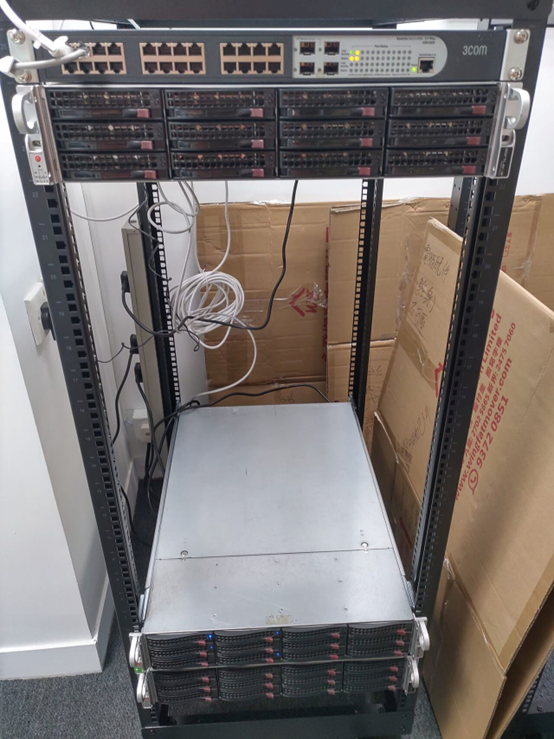 Meanwhile, we would like to share our new computer lab 2.0 using our tailored racks for hosting servers. Our own design 25U open frame #rack is #adjustable and able to support #400KG. It is a rack able to be installed or uninstalled within 45 minutes. So, it is fit for temporary projects or even home-use.

 2.
2. 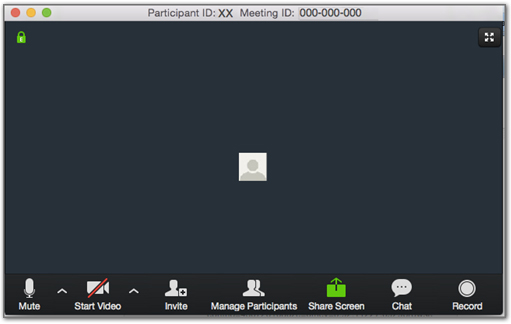 Unfortunately, more users found that it is possible to expose the meeting to strangers without setting the security carefully. Also, Zoom had shared the meeting information with servers located in China. It is very sensitive for information leakage due to the American Chinese founder. In APR 2020 (latest update), they have fixed their security issues.
3.
Unfortunately, more users found that it is possible to expose the meeting to strangers without setting the security carefully. Also, Zoom had shared the meeting information with servers located in China. It is very sensitive for information leakage due to the American Chinese founder. In APR 2020 (latest update), they have fixed their security issues.
3. 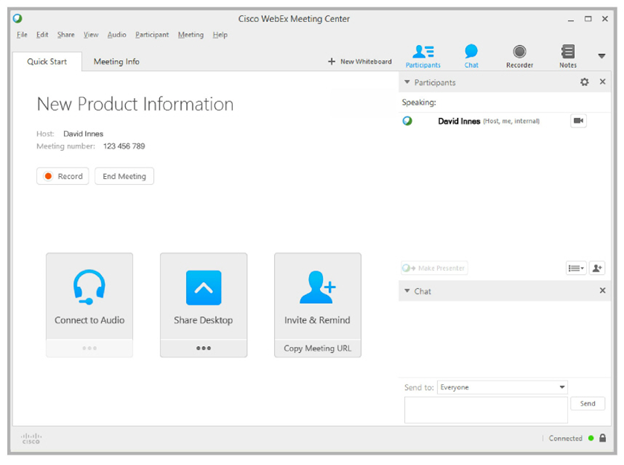 Furthermore, Cisco WebEx is the pioneer for providing video conference solutions with the best security. So, it is better for businesses with higher budget.
4.
Furthermore, Cisco WebEx is the pioneer for providing video conference solutions with the best security. So, it is better for businesses with higher budget.
4.  Also, you can have a choice to host the Jitsi at your own server and add security protection like authorized account to start a meeting. As many other open source solution, it is possible to integrate your own LDAP server for installation on-premises. We can help you or your organization to
 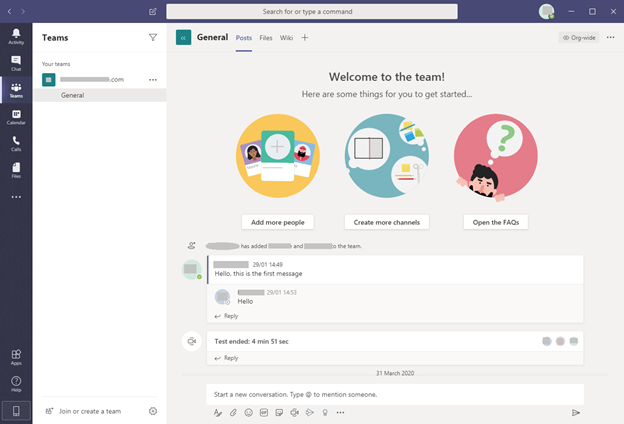 It is quite easy to manage and fully integrate with Microsoft Active Directory. For the functionalities, it is basically similar to WebEx but in a different user interface.
6. Others
There are other different vendors providing similar monthly subscription plans like Zoom or Cisco including:
It is quite easy to manage and fully integrate with Microsoft Active Directory. For the functionalities, it is basically similar to WebEx but in a different user interface.
6. Others
There are other different vendors providing similar monthly subscription plans like Zoom or Cisco including:

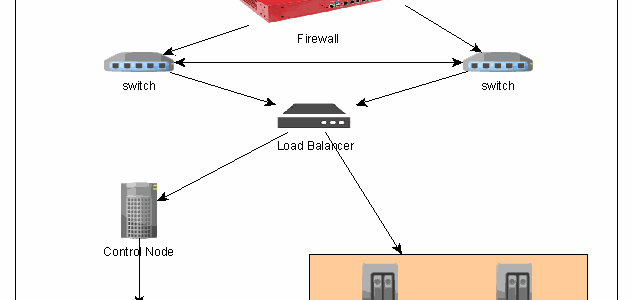
 Figure 1: Open Stack – Architecture for the Private Cloud in Archsolution Limited
For hardware, they are basically listed below:
Figure 1: Open Stack – Architecture for the Private Cloud in Archsolution Limited
For hardware, they are basically listed below:
 Figure 2: Open Stack architecture – for a data science consulting company
The data science consulting company is aimed to build their own private cloud with open source technology for research and training purposes. There are some vital R&D projects like IoT and AI running in this platform.
If it is required to have HADR, it is just needed to duplicate 1 set to another data center with the synchronization to maintain the information stored at near real-time basis.
For the management of Open Stack cloud, we use chef and compass to maintain the daily operation for the private cloud. With the continuous development of Open Stack framework and improvement in different Linux distro, Open Stack is now a reliable and scalable platform without any software investment like VMWare / Citrix / Microsoft, etc. Thus, this is a promising solution for enterprise with HADR features and live deployment of VMs. All-in-all, the private cloud solution should be a good answer for the public cloud security concerns and also the flexibility & scalability within a corporate environment.
Figure 2: Open Stack architecture – for a data science consulting company
The data science consulting company is aimed to build their own private cloud with open source technology for research and training purposes. There are some vital R&D projects like IoT and AI running in this platform.
If it is required to have HADR, it is just needed to duplicate 1 set to another data center with the synchronization to maintain the information stored at near real-time basis.
For the management of Open Stack cloud, we use chef and compass to maintain the daily operation for the private cloud. With the continuous development of Open Stack framework and improvement in different Linux distro, Open Stack is now a reliable and scalable platform without any software investment like VMWare / Citrix / Microsoft, etc. Thus, this is a promising solution for enterprise with HADR features and live deployment of VMs. All-in-all, the private cloud solution should be a good answer for the public cloud security concerns and also the flexibility & scalability within a corporate environment.