
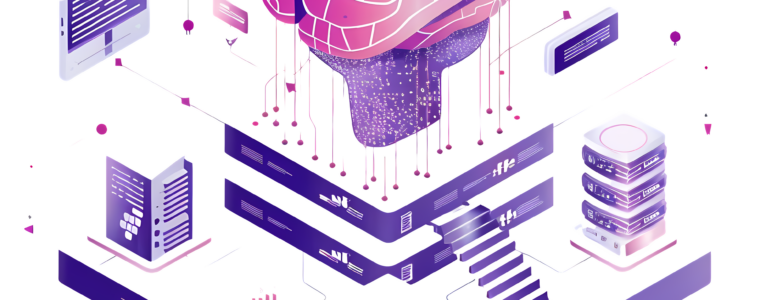
Building Sovereign AI Solutions: On-Premise Deployments for Regulated Industries
As the post-summer period ushers in a season of strategic planning and new project cycles, regulated industries face a critical juncture in their AI adoption journey. The question is no longer if AI will be deployed, but how it can be done in a way that meets stringent compliance, privacy, and data sovereignty mandates. For sectors like healthcare, finance, government, and legal services, the public cloud’s shared responsibility model often introduces unacceptable risk.
This strategic pivot is toward Sovereign AI Solutions: purpose-built, on-premise AI deployments that ensure total data control, regulatory adherence, and operational independence. For IT leaders planning Q4 and beyond, building a sovereign AI capability is becoming a cornerstone project for maintaining competitive parity without compromising on compliance.
Why Sovereign, On-Premise AI is Non-Negotiable for Regulated Sectors
The calculus is clear. While cloud AI offers speed and scale, it cedes control over three critical assets:
- The Data: Patient records, financial transactions, and classified information cannot cross jurisdictional boundaries or reside in multi-tenant environments without rigorous, often impractical, contractual safeguards.
- The Model: Fine-tuned models become proprietary intellectual property. Training or running them on external infrastructure risks exposing core competitive algorithms or sensitive inferences.
- The Governance: Auditors and regulators require transparent, inspectable chains of custody, processing, and access logs—something far more straightforward within a dedicated, physically controlled environment.
An on-premise sovereign AI strategy directly reclaims control over all three, turning regulatory constraints into architectural strengths.
The Pillars of a Sovereign AI Architecture
Building a future-proof sovereign AI solution requires more than just installing servers behind a firewall. It demands a holistic architectural approach centered on four pillars:
- The Isolated Performance Core: Specialized Hardware
The foundation is a dedicated, high-performance computing (HPC) cluster within your data center or a private colocation facility.
- GPU/Accelerator Selection: Choose the right mix of NVIDIA, AMD, or specialized AI accelerators (like Groq or Cerebras) based on your primary workload (inference vs. training, computer vision vs. LLMs).
- Secure Networking: Implement high-throughput, low-latience InfiniBand or ethernet fabrics with strict micro-segmentation to isolate the AI cluster from general corporate networks.
- Lifecycle Management: Plan for hardware refreshes, maintenance, and scalable expansion without disrupting live services.
- The Privacy-Enhancing Software Layer
The software stack must enforce privacy by design.
- Air-Gapped Model Hub: Host a curated, internal repository of approved, vetted open-source models (Llama 2, Mistral) or your proprietary models.
- Federated Learning Capabilities: For multi-institution collaborations (e.g., hospitals), deploy frameworks that allow model training across decentralized data sources without the raw data ever leaving its original sovereign location.
- Synthetic Data Generation: Integrate tools to create high-quality synthetic datasets for model training and testing, minimizing the use of real sensitive data.
- Integrated Governance, Risk, and Compliance (GRC) Controls
Compliance must be automated and auditable.
- Data Lineage & Provenance Tracking: Every piece of data used for training and every inference generated is logged with an immutable record of origin, transformation, and access.
- Policy-Driven Orchestration: Enforce policies (e.g., “this model can only process EU resident data on servers located in Frankfurt”) directly within the AI workload scheduler.
- Unified Audit Trails: Generate consolidated reports for internal audits and regulatory submissions directly from the platform.
- The End-to-End Operational Framework
This ensures the system is sustainable, usable, and valuable.
- MLOps for the Private Cloud: Implement a full, on-premise MLOps lifecycle—from version-controlled model development and containerized deployment to continuous monitoring and retraining—all within the sovereign boundary.
- Specialized Talent & Training: Cultivate or partner for the niche skills required to manage and optimize this dedicated infrastructure.
- Clear ROI Metrics: Define success beyond compliance, measuring impact on operational efficiency, risk reduction, and innovation velocity.
The Post-Summer Planning Guide: Your Sovereign AI Project Roadmap
With the strategic rationale clear, here is a phased approach to launch your sovereign AI initiative this planning season.
Phase 1: Discovery & Design (Q3-Q4)
- Conduct a Data & Use Case Audit: Identify 2-3 high-value, high-sensitivity pilot use cases (e.g., document redaction, anomaly detection in financial logs).
- Define Sovereign Requirements: Document specific regulatory (HIPAA, FINRA, GDPR), data sovereignty, and performance requirements.
- Develop the Technical Architecture: Design the hardware, software, and security blueprint, leveraging proven reference architectures for on-premise AI.
Phase 2: Proof-of-Value & Procurement (Q4-Q1)
- Build a Business Case: Calculate the TCO versus risk, and project the compliance and efficiency benefits.
- Pilot the Stack: Deploy a scaled-down, integrated stack to validate performance, privacy controls, and user workflows with your pilot use cases.
- Finalize Vendor & Partner Selection: Choose hardware vendors and integration partners (like the LocalArch.ai consortium) with proven expertise in secure, on-premise AI.
Phase 3: Full Deployment & Integration (Q1-Q2)
- Deploy Production Infrastructure: Roll out the full, hardened sovereign AI environment.
- Integrate with Enterprise Systems: Connect securely to your data sources (data lakes, EHRs, core banking systems) and downstream applications.
- Establish Center of Excellence: Form the operational and governance team, document procedures, and begin broader organizational training.
Conclusion: Sovereignty as the Foundation for Trust and Innovation
For regulated industries, the path to AI maturity does not run through the public cloud. It is built on-premise, with sovereignty as its first principle. This approach transforms AI from a compliance liability into a trusted, strategic asset.
As you finalize your project portfolios for the coming year, prioritizing a sovereign AI infrastructure is an investment in long-term resilience, brand trust, and the freedom to innovate on your own terms.
Ready to transform regulatory mandates into a competitive AI advantage?
ArchSolution specializes in architecting and implementing sovereign, on-premise AI solutions for the world’s most regulated industries. Contact us to schedule a discovery session and build a detailed project plan for your sovereign AI future.
Keywords: Sovereign AI, On-Premise AI, Regulated Industries, Data Sovereignty, AI Compliance, HIPAA AI, Financial Services AI, Private AI Deployment, AI Governance, Post-Summer Planning, ArchSolution.